The UI Tax
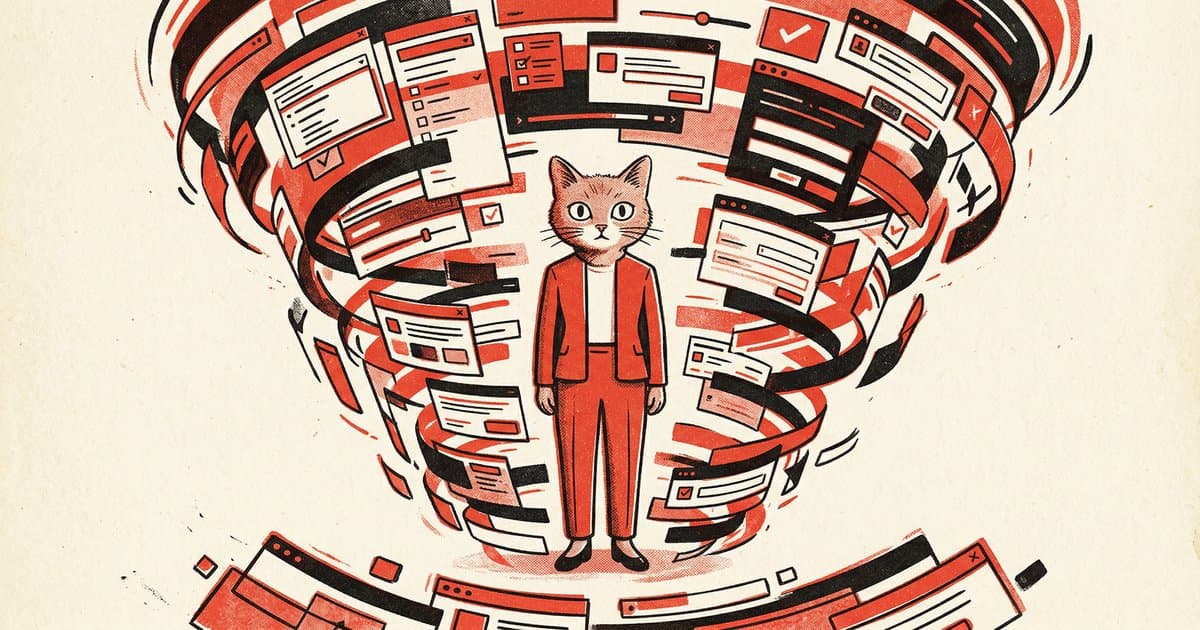
You've been paying this tax your whole digital life.
The UI tax is the cost you pay every time you learn a new interface, navigate a dropdown, or click through a settings page. It's the friction between what you want and what you can make the software do. The movie Her illustrated the real issue: human bandwidth is the bottleneck. Machine bandwidth passed ours long ago. AI doesn't just answer questions -- it increases our upload speed, letting us communicate intent without clicking through a maze of buttons.
Let me ask you something.
How many hours of your life have you spent learning software?
Not building it. Not programming it. Just figuring out where the button is. Learning that the export function is buried three menus deep. Memorizing that you have to click "Advanced Settings" then scroll to the bottom then toggle a switch that's labeled something completely unintuitive.
That's the UI tax. And you've been paying it your entire digital life.
What the UI Tax Is

The distance between what you want and what you click.
The UI tax is the cost of translating what's in your head into a series of clicks, taps, drags, and keystrokes that a machine can understand.
You want to send an email to your customers. But first you have to open MailChimp, navigate to Campaigns, click Create, choose Email, select a template, drag blocks around, write your copy in a tiny text box, add your list, configure the subject line, preview it on mobile, and then hit Send. That entire process -- the clicking, the navigating, the dragging -- is the tax.
What you actually wanted to say was: "Send an email to all my customers about the sale next week." One sentence. Ten seconds of intent. Forty-five minutes of interface.
Every dropdown menu is a tax. Every settings page with thirty toggles is a tax. Every onboarding flow that takes four screens before you can do the one thing you came to do is a tax. We've been paying it so long we forgot it was optional.
The Bandwidth Problem
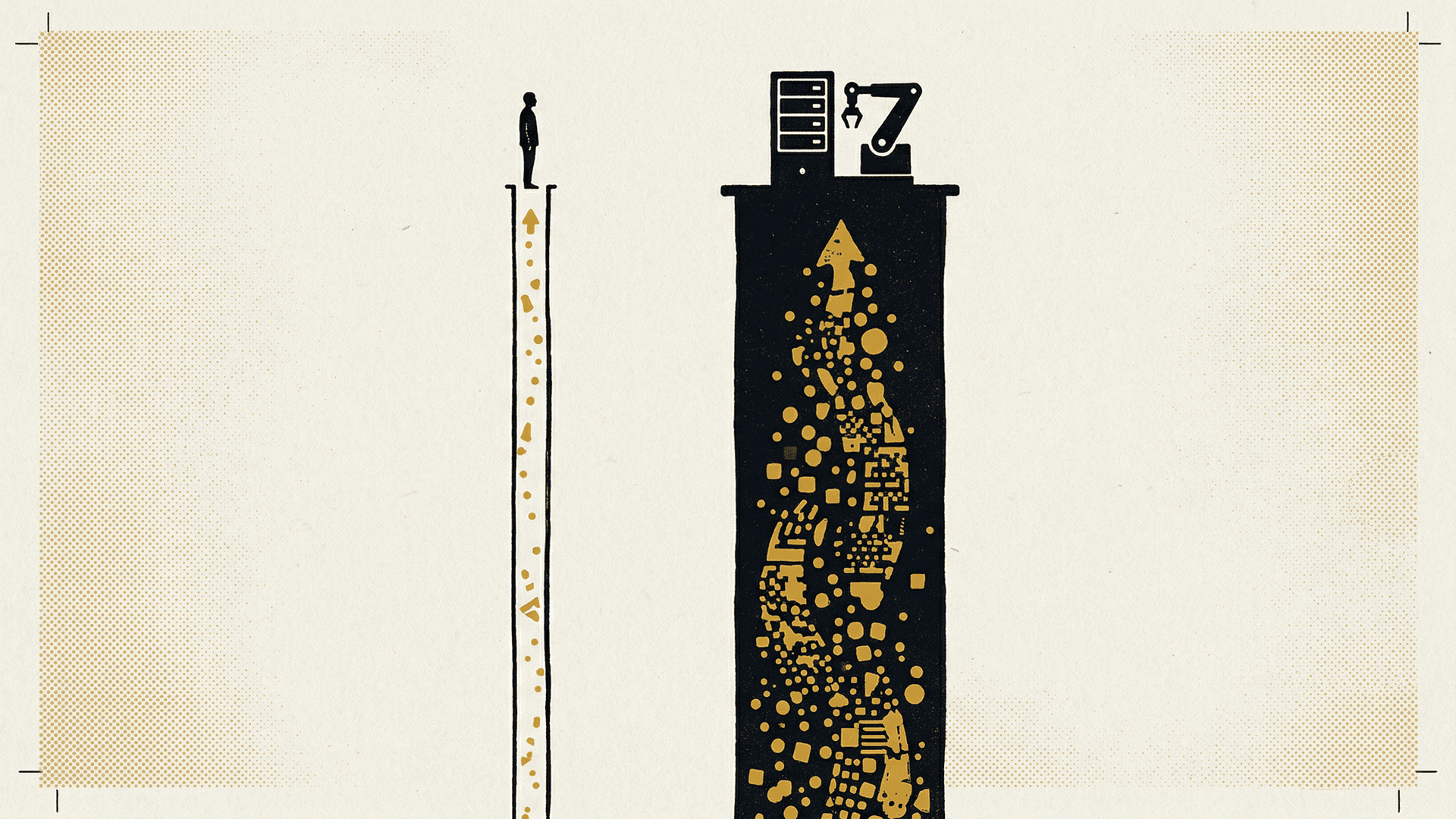
Your pipe is smaller than theirs. That's the whole problem.
The movie Her came out in 2013. Joaquin Phoenix falls in love with an AI operating system voiced by Scarlett Johansson. It's a love story, sure. But buried inside that film is one of the most important observations about technology ever put on screen.
The real problem is bandwidth.
Theodore -- the main character -- talks to his AI. He doesn't click. He doesn't navigate menus. He doesn't learn an interface. He just talks. And the AI understands, responds, and acts. The interface is the conversation.
That movie wasn't about romance. It was about the fact that our fingers and eyes are bottlenecks. Machines can process information at speeds we can't comprehend. They always could. The problem was never the machine's ability to receive instructions -- it was our ability to send them.
We used to communicate with computers through punch cards. Then command lines. Then graphical interfaces. Then touchscreens. Each step was an attempt to increase our upload speed -- to make it easier for humans to tell machines what we want.
But we hit a ceiling. The graphical user interface -- buttons, dropdowns, modals -- maxed out what our fingers could do.
AI is the Upload Speed Upgrade
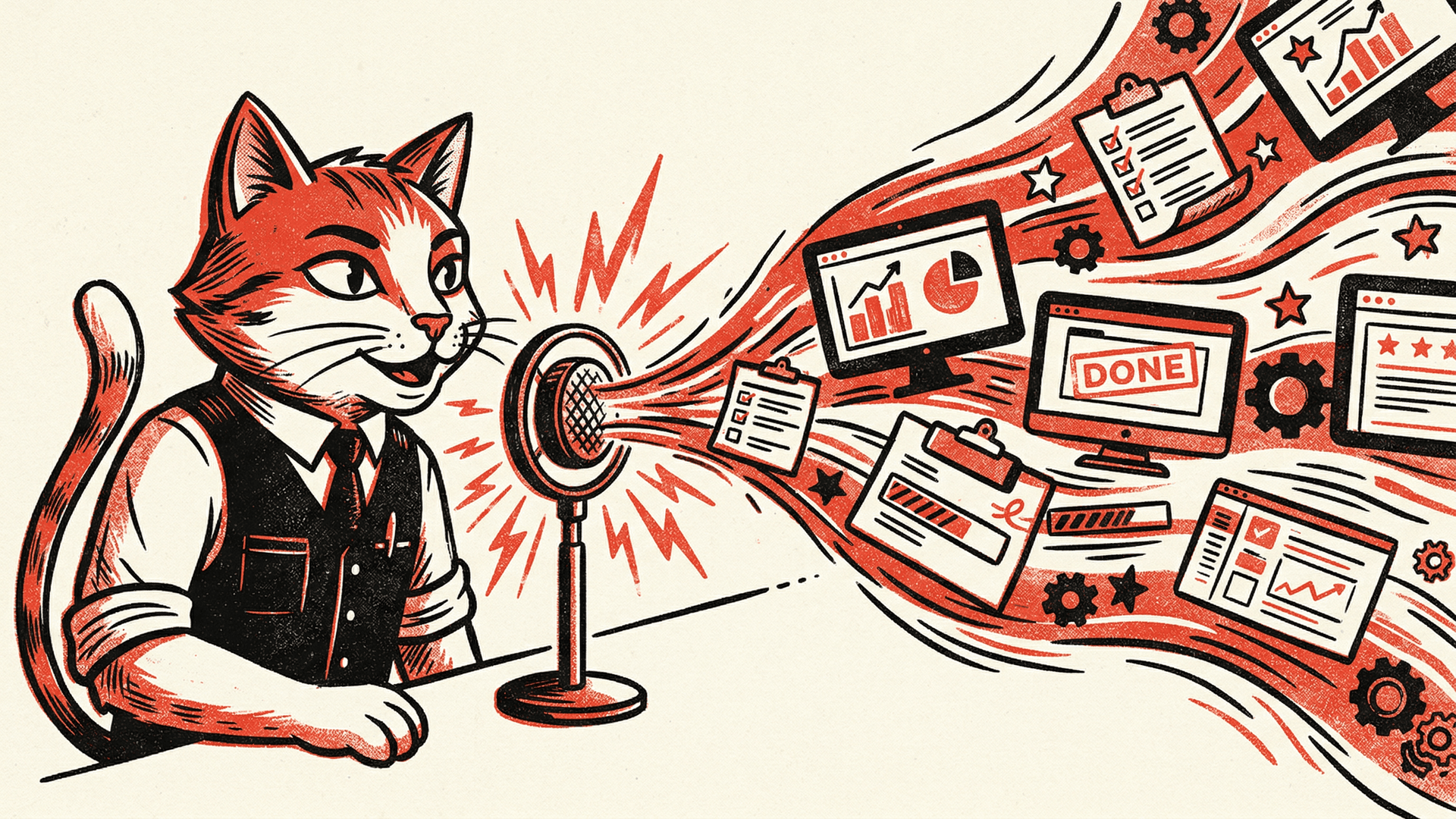
Your voice is faster than your fingers.
Here's what generative AI actually is, when you strip away the hype: it's a bandwidth upgrade for humans.
Not for machines. Machines were never the bottleneck. We were.
When you type a prompt into Claude or ChatGPT, you're communicating intent at the speed of thought. Not at the speed of clicking through five screens. Not at the speed of learning where Salesforce hid the export button. At the speed of saying what you want.
"Create a spreadsheet of all our customers who haven't ordered in 90 days, sorted by revenue." That's one sentence. In the old world, that's thirty minutes of clicking through a CRM, applying filters, exporting to CSV, opening in Excel, and sorting. In the new world, it's ten seconds and a prompt.
The bandwidth math: speaking is roughly 150 words per minute. Typing is about 40. Navigating a GUI -- clicking, waiting for pages to load, scanning for the right button -- is maybe 5-10 "effective words per minute" of intent. A well-crafted prompt communicates more intent in one sentence than ten minutes of clicking.
And while the machines may be coming for some jobs, using generative AI is a way to increase our own upload speeds. It's not about replacement. It's about amplification. The people who learn to communicate with AI effectively are the ones who break through the bandwidth ceiling that's been holding humans back since the first GUI.
The Prompt is the New Interface
The companies that understand this will thrive. The ones that don't will keep building settings pages with forty toggles that nobody reads.
The future isn't a better dropdown menu. It's no dropdown menu at all. The future is saying what you want and having it happen. The interface disappears. The UI tax goes to zero.
We're not there yet. But we're closer than most people realize.
Your voice is faster than your fingers. Your intent is clearer than your clicks. The tax is about to get repealed.
Wanna learn more? Join The Vibe Jam for free.

Chris Johnston
Chris Johnston is the founder of PostScarcity AI and The Vibe Jam. Former development agency leader who managed 8 agile teams for venture-backed clients. Now teaching non-technical people to build with AI through vibe coding. Book a free Vibe Check to get started.
More About Chris Johnston