Death of the CRUD Monkey
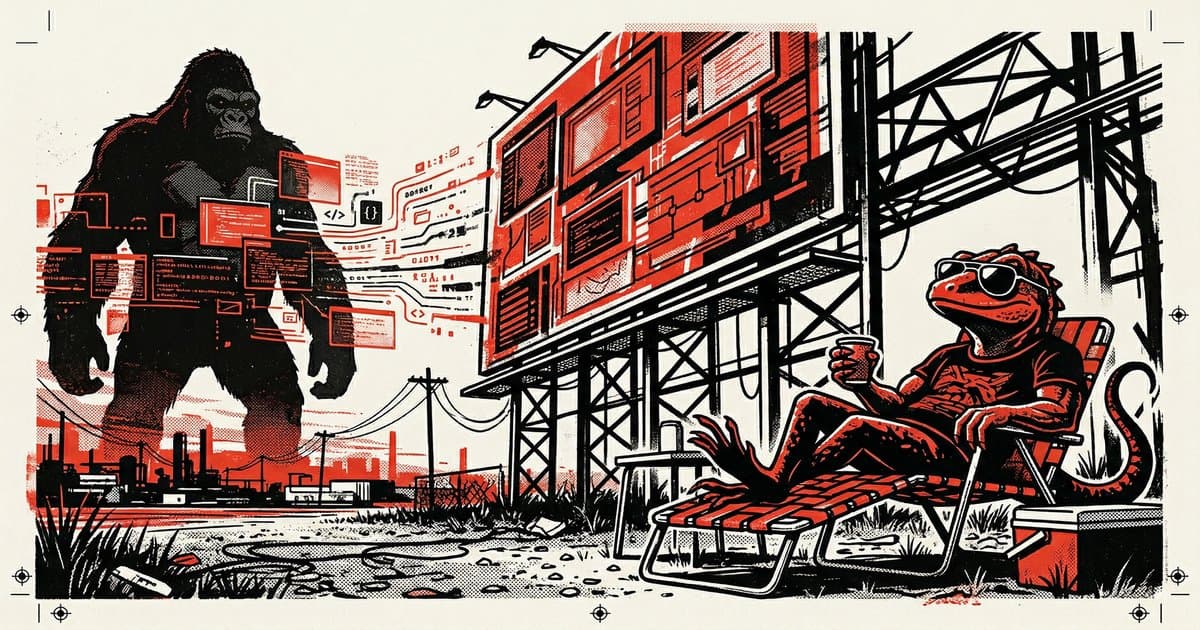
The CRUD monkeys have met their match.
CRUD stands for Create, Read, Update, Delete -- the four operations every app performs on a database. A "CRUD monkey" is a software engineer who builds the user interfaces for those operations: login screens, form fields, dropdowns, dashboards. Language models like Claude, ChatGPT, and Gemini are CRUD King Kongs. They generate these interfaces instantly. Software isn't dying -- but the era of paying someone to hand-build forms is over.
Let me introduce you to a term you've probably never heard but have experienced every single day of your digital life.
CRUD.
It stands for Create, Read, Update, Delete. Those are the four things every piece of software does to a database. Every app. Every website. Every tool. Four operations. That's the whole game.
What is CRUD?
Four operations. Every app you've ever used.
When you sign up for an account, that's Create -- a new row gets added to the users table.
When you scroll through your feed, that's Read -- the app pulls rows from a database and displays them on your screen.
When you update your profile picture, that's Update -- one field in your row gets overwritten.
When you delete a post, that's Delete -- a row gets removed.
That's it. Every app you've ever used -- Instagram, Salesforce, your bank's website, that project management tool your boss made everyone switch to -- is just a dressed-up interface for performing these four operations on a collection of tables.
The CRUD Monkey
So what's a CRUD monkey?
A CRUD monkey is a software engineer who knows how to create user login screens, set up a series of forms on a web page, wire up dropdown menus, build dashboards that display charts, and connect all of it to a database. They take orders through forms. They display analytics through charts. They manage user permissions through admin panels.
It's honest work. It built the internet as we know it. For decades, this was the core job of most software engineers -- not building algorithms or inventing new technology, but building the interface layer between humans and databases.
Think of it this way: the database is the engine. The CRUD monkey builds the steering wheel, the dashboard, and the pedals. Without them, you'd have to pop the hood and hotwire the engine every time you wanted to drive. They made databases usable for normal people.
CRUD King Kongs
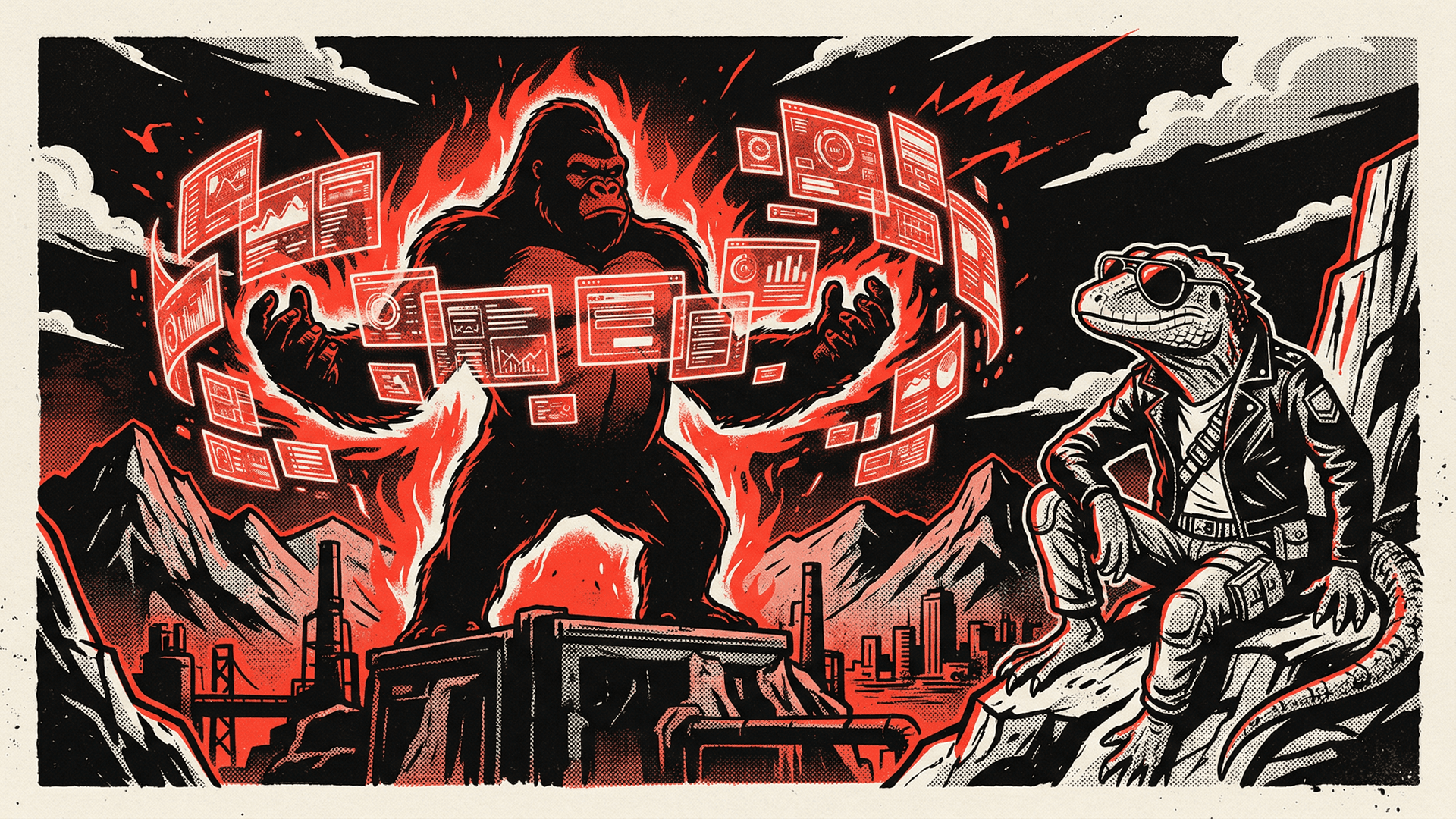
The language models aren't CRUD monkeys. They're CRUD King Kongs.
Here's the problem for CRUD monkeys: language models like Claude, ChatGPT, Gemini, and the growing suite of open-source models are CRUD King Kongs.
They don't just build forms. They build entire applications. Login screen, database schema, API endpoints, admin dashboard, user permissions -- generated in minutes. Not days. Not sprints. Minutes.
Ask Claude to build you a customer management app. It will create the database tables, build the API, generate the frontend with forms and filters and search, add authentication, and deploy the whole thing. The same work that used to take a team of CRUD monkeys a month takes a language model an afternoon.
And it's not just speed. These models have been trained on every open-source codebase on the planet. They've seen every form pattern, every login flow, every dashboard layout. They don't make the rookie mistakes. They don't forget edge cases. They produce working CRUD apps at a quality and speed that no individual engineer can match.
Software Isn't Dying
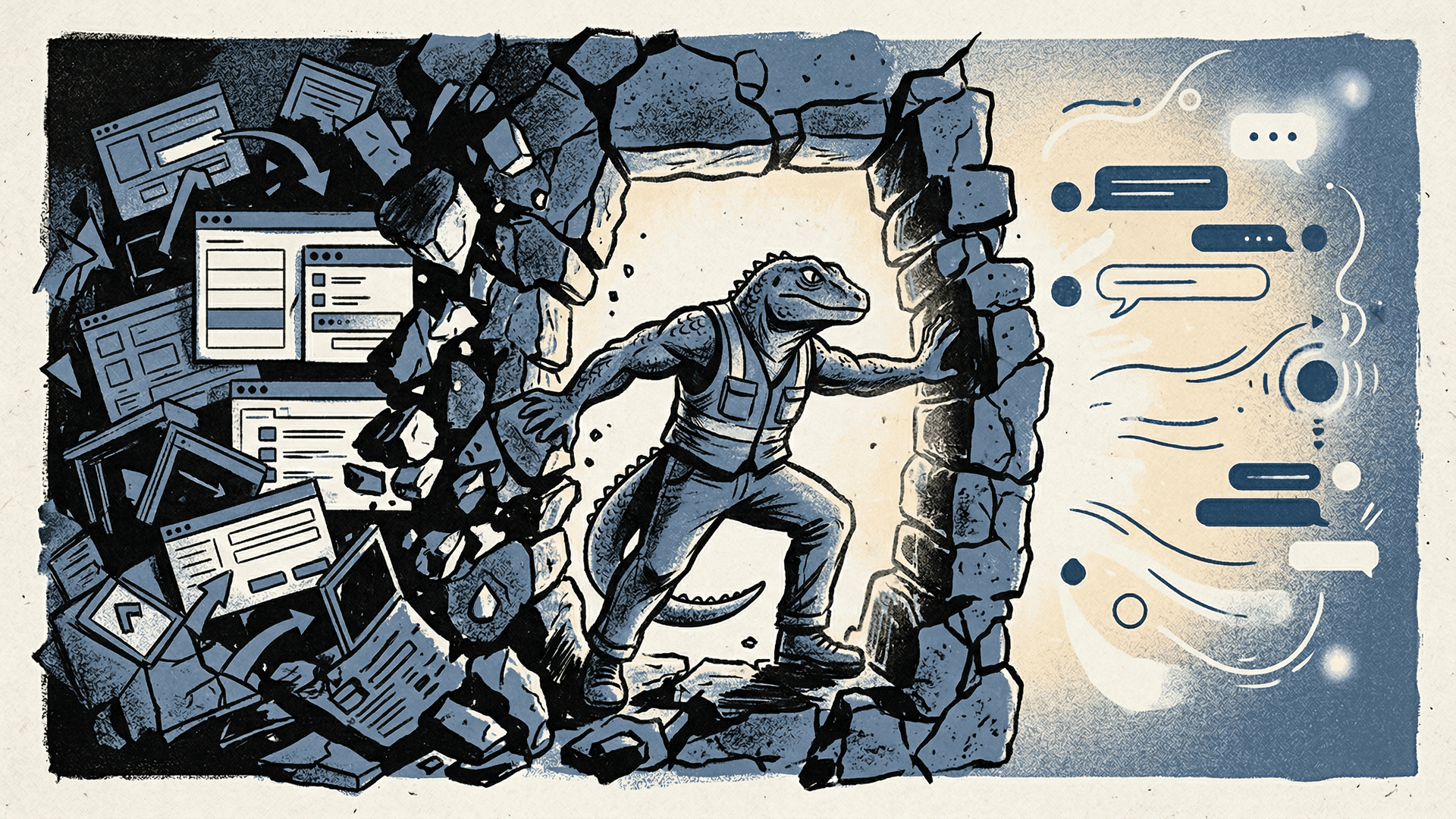
Software isn't dying. The interface is changing.
Now, before the pitchforks come out -- software isn't dying. Not even close.
What's dying is the interface layer as we know it. The dropdowns, the modals, the multi-step wizards, the settings pages with forty toggles. The part of software that required a human to painstakingly build every screen, every button, every validation message.
The database still exists. The business logic still matters. The security, the integrations, the infrastructure -- all of that is still critical. But the part where someone had to hand-craft an HTML form and wire it to a backend endpoint? That's the part the machines do now.
The engineers who thrive in this new world won't be the ones who know how to center a div. They'll be the ones who understand the problem well enough to describe it clearly -- and let the machine build the interface.
The CRUD monkey had a good run. But the king has arrived.
Wanna learn more? Join The Vibe Jam for free.

Chris Johnston
Chris Johnston is the founder of PostScarcity AI and The Vibe Jam. Former development agency leader who managed 8 agile teams for venture-backed clients. Now teaching non-technical people to build with AI through vibe coding. Book a free Vibe Check to get started.
More About Chris Johnston